


Textiles
Intent
“Design and Technology is about making things that people want which work well. Creating these things is hugely exciting: it is an inventive and fun activity”
Quote- James Dyson, Chairman, Dyson ltd.
Textiles Technology at St Edmund`s Catholic School allows students to learn through problem solving and engage in their learning through creativity, giving them the ability to turn their ideas into reality.
All pupils have the opportunities to experience practical activities having watched demonstrations. They participate in experimental sessions and develop their independent research skills through the use of ICT.
Outcomes
Autumn Picture Update




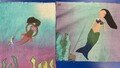
Key Stage 3 (Year 7-9)
During Years 7, 8 and 9 all pupils will have the opportunity to study Textiles within a roundabout of 12 lesson cycles.
Year 7
Flora & Fauna
Pupils will create a printed pattern and 3D creature inspired by the theme of Flora a Fauna.
Pupils will look at primary and secondary research to produce drawing studies that will inspire the design process of their creation.
Pupils will experiment and work with tone, detail, form and colour to develop their drawing skills.
Pupils will experiment and learn techniques such as design theory, foam printing, mark making techniques, hand embroidery and 3D creation.
Pupils will learn how to hand sew and evaluate their work against the success criteria given.
Year 8
Water & Movement
Pupils will create a water themed design bag using a variety of Textiles techniques including batik, dye and applique. The fabric will then be turned into either a wall hanging or a bag.
Pupils will look at artist research to inform and inspire their designs. Pupils will have the freedom to show creativity and imagination within the design and the making of their project.
Through demonstrations and tasks, pupils will develop their hand sewing and batik application skills to produce high quality water themed projects.
The finished item will then be evaluated and compared to the success criteria given at the start of the project.
Year 9
Icons
Pupils will take inspiration from the theme Icons to create a colourful and unique Icon themed cushion.
Pupils will look at primary and secondary research to inspire their project.
Throughout the project pupils will be introduced and shown demonstrations on a variety of Textiles techniques image transfer, Fabric dyes, applique, embellishment and high-level hand embroidery stitches.
Pupils will show technical skills through hand sewing to produce an eye catching and detailed Icon themed cushion.
The finished item will then be evaluated and compared to the success criteria given at the start of the project.
KS4 GCSE Textiles
In year 10 we begin the course with skills-based workshops under the theme of Food. We look at techniques such as machine embroidery, needle felting and lino printing. Students are introduced to high level artist research and ways to develop their work within a chosen theme. Progress is evidenced and analysed to fulfil the assessment objectives set by AQA. Assessment objectives (AO’s) include research, experimentation & refining, planning & analysis, and all personal responses.
From January through to the end of year 10 we begin the project Natural world. This is a sustained project that includes another set of techniques. Students look in depth at a variety of research and create a series of experimental samples using combinations of the techniques learned.
When students return in year 11 the Natural world project is continued, rounding up the personal responses along with all thoughts and sketches to chart their growing journey of curiosity and discovery. Students have a 5 hour mock exam when they can finalise their final piece of the sustained project, bringing Natural world to a close. The food project and Natural World project together are 60% of the overall GCSE grade.
After Christmas break, we begin the spring term with the official release of the exam paper. This sparks the beginning of the exam project which provides students with 40% of their overall grade. This project starts in a similar way with mood boards and research before going on to the creation stage of skilled samples along the students individually chosen exam theme.
Around Easter time students complete their final part of the course with a 10 hour exam, in which they complete a final design piece to their project.